

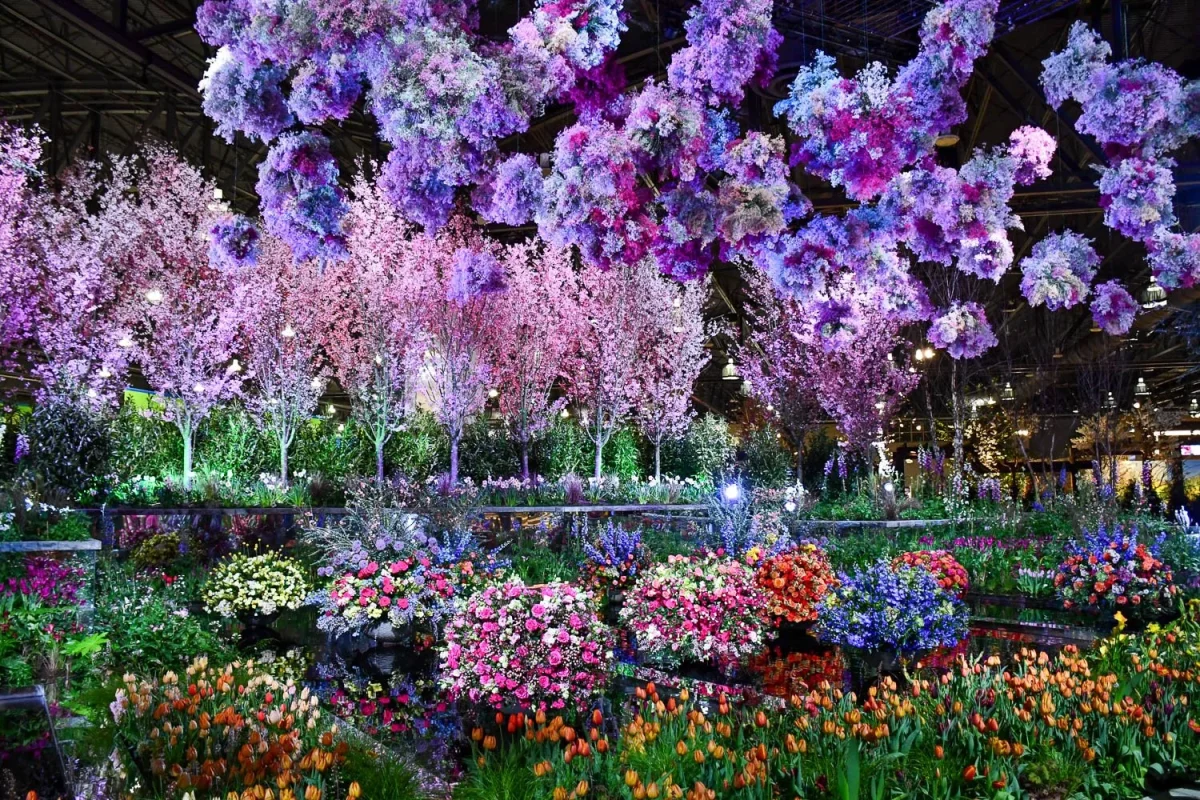
This year, the Philadelphia Flower Show, the world’s oldest and largest horticultural event, marks its 197th year. Considered one of the top three flower shows in the world, it rivals counterparts in London and Singapore and inspires smaller shows across the globe.
This year’s theme—Rooted: Origins of American Gardening—honors America’s 250th anniversary and all of the people who built the nation. Even as other exhibits in the city are dismantled, this exhibit showcases Quakers, African Americans, Native Americans, and Pilgrims. It outlines the roles they played in creating the country we know today, both agricultural and otherwise.
The show itself was nothing short of magical. The flowers were an array of colors intersecting in elaborate displays of light and music. There were walk-through exhibits and homes constructed solely for peering through windows. Bonsai trees that have been alive almost as long as the show has been running, mixed with scenes from a play created for the exhibits.
There were rows of boxes where designers brought a single scene to life—whether it be the Jersey Devil’s hideout or a thrift store boutique.
The most astounding part of the show was that everything was alive. No matter how vibrant or striking the flower was, it was part of the natural world. Pink Hyacinths, violet roses, and golden marigolds decorated stalls. Vendors called from their booths to sell flower crowns fit for a fairytale as butterflies swarmed overhead in the walk-through exhibit.
Unlike last year, most of the vendors this year were kept in a separate room downstairs—a deviation from previous years where they shared the convention floor. While meant to save ticket holders from mercenary vendors, this change in proximity was disappointing to many who knew how the event functioned in the past. Many of the shops that had previously (yes, crowded) the convention floor belonged to small businesses with eccentric flower-themed wares or smaller shops filled with tasty samples. While these vendors were still accessible, it was less magical to encounter them without the bright lights and music of the convention floor adding to their off-beat nature.
Still, these shops could be enjoyed even without the exhibits as backdrops, and it did lessen the density of the crowd.
All in all, the show mixed wonder for the past with the beauty of the modern world, making it a must-see event as spring approached and flowers started to bloom across Havertown.