

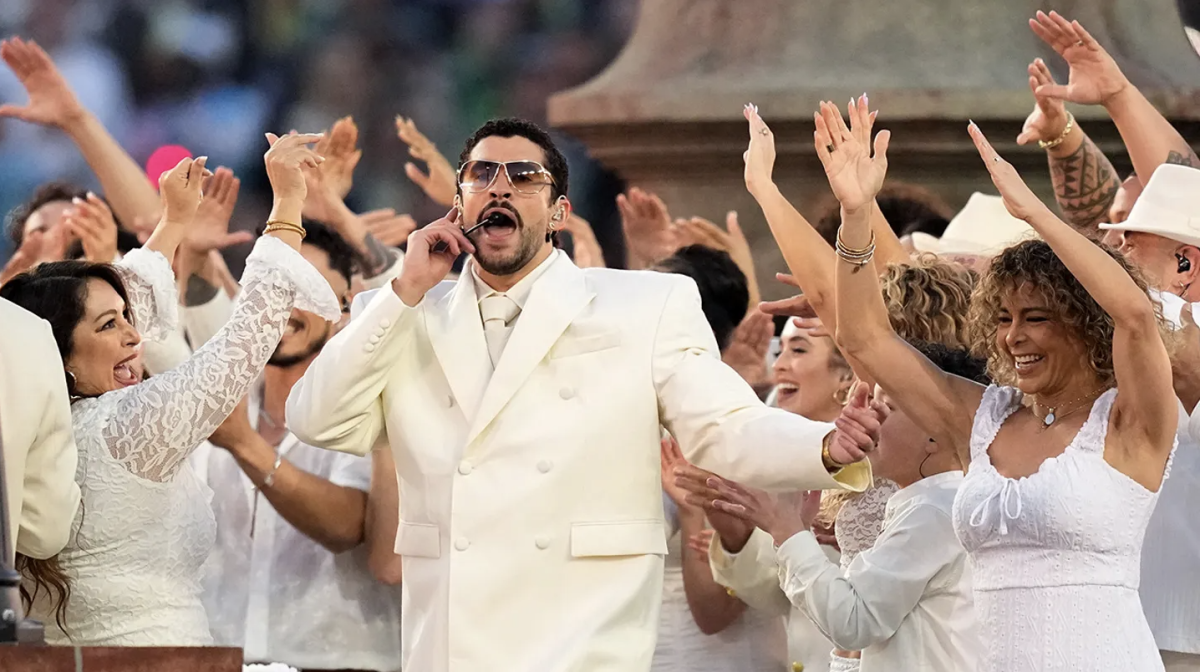
Amid the excitement of a highly invigorating Super Bowl 60, Bad Bunny seized the spotlight with a performance that many fans hailed as sensational and as an unforgettable display of entertainment. By the time the game had resumed for the third quarter, Bad Bunny had left Super Bowl fans with more than musical delight—he had left them with a story.
The Performance
Bad Bunny performed a collection of songs, including fan favorites “BAILE INOLVIDABLE” and “NUEVAYoL.” “Debí Tirar Más Fotos,” an Instagram sensation, was also featured. The song pays homage to salsa music while exploring lost love, providing a metaphor for fleeting romance. It made history as the first salsa track to reach #1 on Apple Music’s U.S. charts and also topped Billboard’s Latin Airplay Chart. Featuring a poignant monologue about love and memory, the song stuck with fans.
While Bad Bunny himself provided engaging entertainment, other artists contributed to the performance. Lady Gaga performed a salsa-like version of Bruno Mars and her “Die with a Smile.” Ricky Martin added to the show with “LO QUE LE PASÓ A HAWAII.” Bad Bunny also included iconic hits by Daddy Yankee (“Gasolina”), Tego Calderón (“Pa’ Que Retozen”), and Don Omar (“Dale Don Dale”), referencing genres that influenced his own. This setlist showcased a mix of Bad Bunny’s latest hits and fan favorites, celebrating the music community.
Adding to the cultural resonance, Bad Bunny included elements that directly referenced his Puerto Rican heritage. Backdrops resembled sugarcane fields, accompanied by dancers wearing pavas—traditional Puerto Rican straw hats. Staged elements like coco frío carts, piragua stands, and taco stands highlighted aspects of Puerto Rican culture. Collaborations with Lady Gaga and Latin American singer Ricky Martin further reinforced a sense of communal pride and celebration.
A Heartfelt Finale
Bad Bunny closed the show with “Debí Tirar Más Fotos,” a heartwarming action, walking out with flags from nations across the world. Flags from Colombia to Ghana show the acknowledgement of a vast collection of communities. These factors created a sense of unity and community, which Bad Bunny hoped to promote.
Through music, dance, and cultural storytelling, Bad Bunny’s Super Bowl performance went further than entertainment, leaving fans not just with memories but with a poignant message that music can unite and tell the stories of marginalized communities.